Microplastic contamination has emerged as one of the fastest-growing and least visible environmental and health challenges worldwide. Microplastics are tiny plastic particles (less than 5 mm in size) formed from the breakdown of larger plastic waste. These particles have now been detected in drinking water, food products, air, and even inside the human body.
Recent studies estimate that an average person may ingest tens of thousands of microplastic particles annually through water and food consumption. Reports by global organizations such as UNEP and WHO indicate that microplastics have been found in bottled water, tap water, seafood, salt, and packaged food products. Despite increasing awareness, there is still limited public understanding of how frequently people are exposed to these particles in daily life.
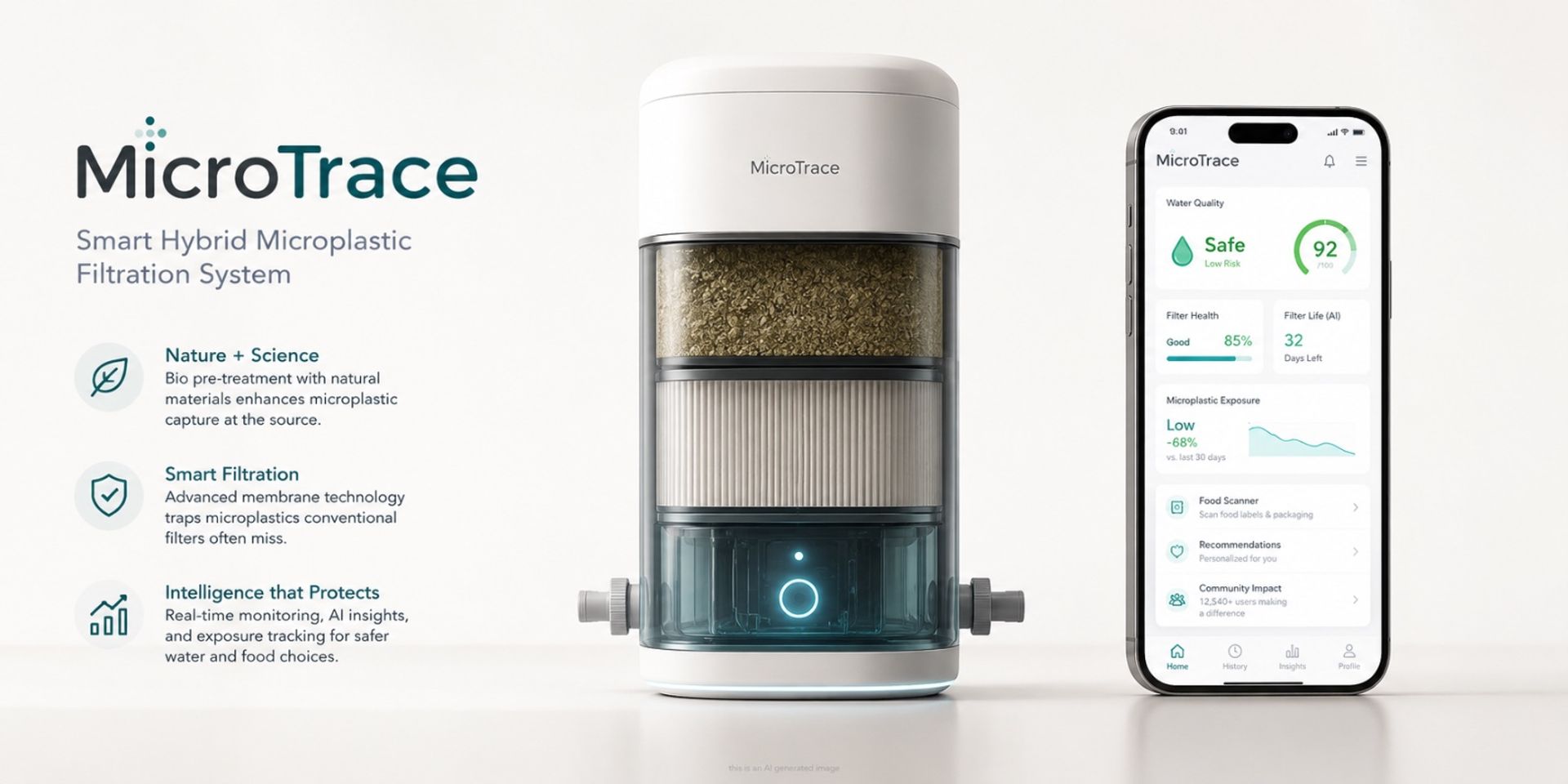
The key issue is not just the presence of microplastics, but the lack of accessibility to detection and prevention tools at a household level. Conventional water filtration systems are primarily designed to remove bacteria, sediments, and dissolved impurities, but many are not specifically optimized to target microplastics. Even when filtration occurs, users have no way of verifying its effectiveness in real time.
Additionally, there is currently no integrated system that connects water safety with food-based microplastic exposure. Consumers cannot easily assess the microplastic risk associated with packaged food items or ingredients, leading to unintentional long-term exposure.
This creates three major gaps:
Lack of targeted microplastic filtration solutions
Absence of real-time monitoring and awareness systems
No unified platform linking water and food-based exposure
If unaddressed, long-term exposure to microplastics may contribute to health concerns such as inflammation, oxidative stress, and potential organ impact, as suggested by emerging scientific studies.